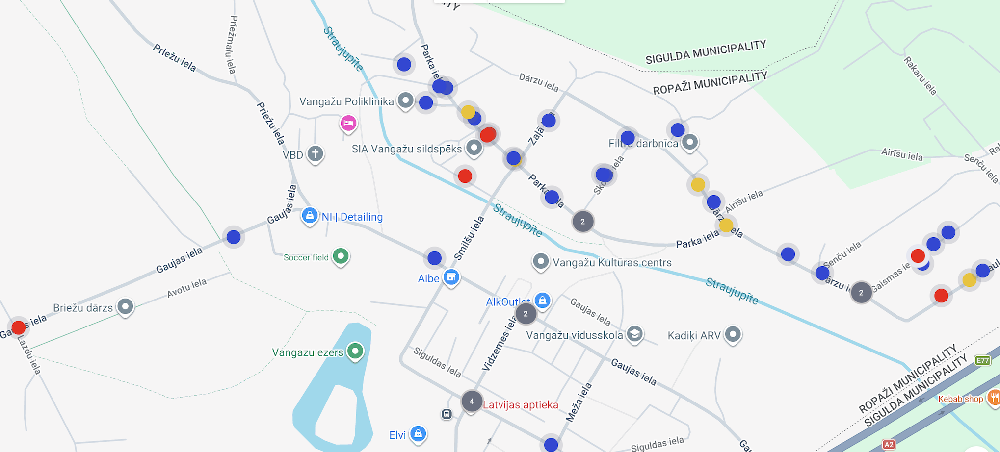
How It Works – Acoustic Logger Network Screening
Acoustic loggers are installed on underground hydrants or valves, ensuring direct acoustic contact with the water main. The spacing between installation points depends on pipe material:
-
Metal / cast iron pipes: approximately 150–200 metres between points
-
Polyethylene (PE) plastic pipes: approximately 50 metres between points
Loggers are programmed to operate during predefined time periods — typically at night when water consumption and background noise are minimal. During this period, the devices analyse acoustic conditions within the pipeline. If a constant noise pattern characteristic of a water leak is detected, the logger records and stores the event for further analysis.
After data collection, potential leak zones can be quickly identified. This enables targeted, in-depth diagnostics using:
-
An acoustic correlator for precise leak location calculation
-
A ground microphone for local confirmation and pinpointing
Using this method, we provide a complete service cycle — from logger deployment and network screening to precise leak location and technical reporting.
This structured approach allows large areas to be assessed efficiently, repair works to be prioritised effectively, and water losses to be significantly reduced within the distribution network.